

This post may contain affiliate links. Please read my disclosure policy.
Homemade Dashi Powder at a Glance
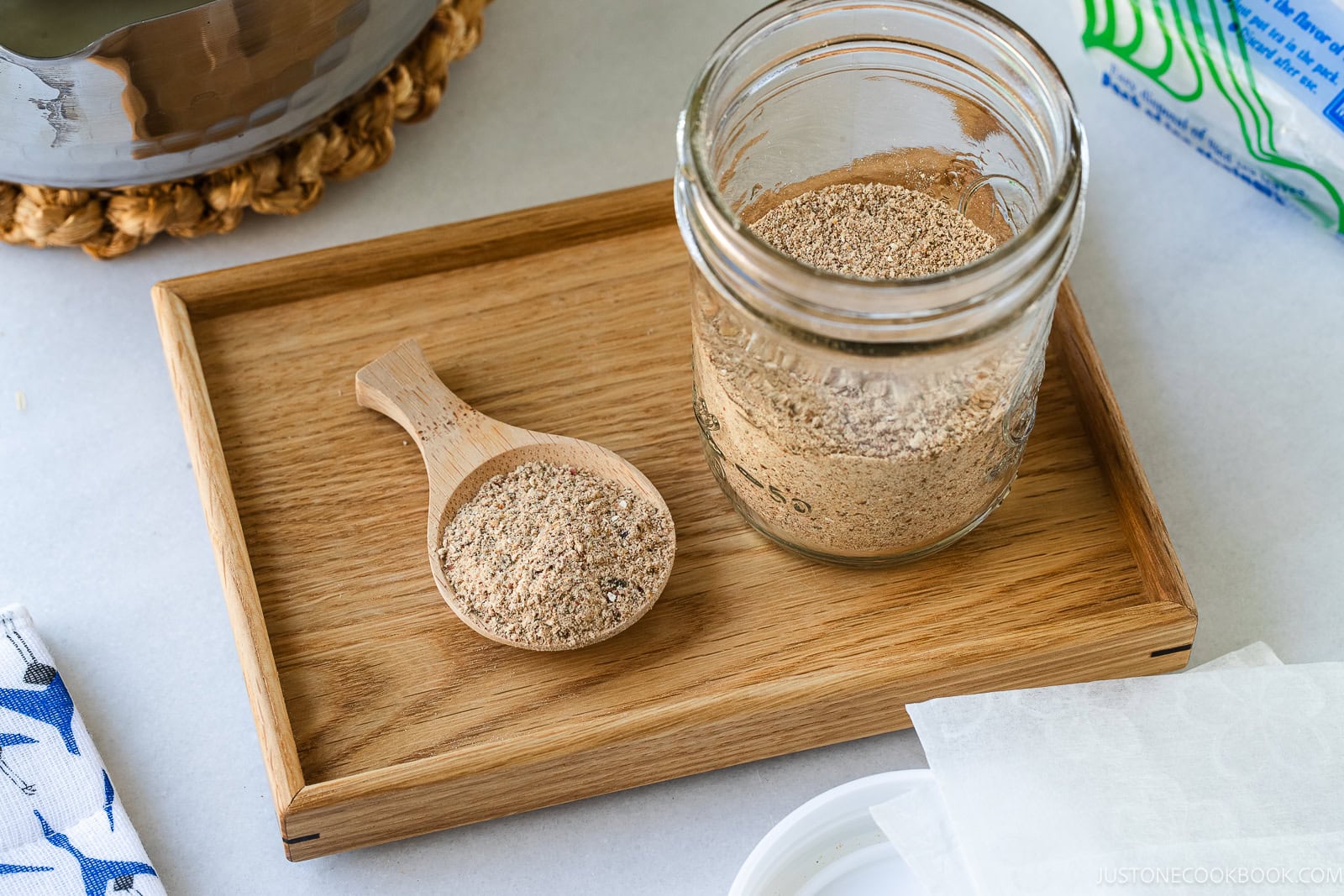
Dashi powder (だしの素, 粉末だし粉) is a convenient Japanese seasoning used to make soup stock and add umami to everyday dishes. While many commercial versions contain added salt and additives, my Homemade Dashi Powder gets its flavor from just four dried ingredients, so you can control the salt in your cooking.
Why You’ll Love It
- Just four ingredients – Kombu, dried anchovies, shiitake mushrooms, and bonito flakes create a rich, layered umami flavor without added salt.
- My dry roasting technique – Toasting removes excess moisture, making the ingredients easier to grind while reducing fishy odors and bringing out their aroma.
- Ready whenever you need it – Keep the powder on hand for quick dashi broth or sprinkle it directly into everyday Japanese dishes.
Jump to Recipe
My Recipe Story
I’ve always relied on dashi packets or homemade dashi for my daily cooking. I’ve avoided instant dashi powder because the added salt and other seasonings can change the taste of my dishes and throw off my seasoning ratios.
But there are nights when instant dashi powder would come in handy. Plus, readers often ask me which dashi powder brand is best. This got me thinking… why not make my own? I dry roast four classic dashi ingredients, then grind them in a food processor. The result is my Homemade Dashi Powder. It has the convenience of store-bought powder but the clean flavor of homemade dashi.
If you love dashi, try my Vegan Dashi, Kombu Dashi, and Iriko Dashi recipes next! To learn more about dashi, read my What is Dashi and How to Make It guide.
Table of Contents
+ View More− View Less
Key Ingredients
You’ll need kombu (dried kelp), katsuobushi (dried bonito flakes), dried anchovies (iriko/niboshi), and dried shiitake mushrooms for homemade dashi powder.
Find the printable recipe with measurements below.
Jump to Recipe
How to Make Homemade Dashi Powder
- Prep the ingredients. Cut the kombu and anchovies into small pieces, and break the dried shiitake mushrooms into smaller pieces.
- Toast each ingredient. Dry roast them separately in a frying pan over low heat until crisp and fragrant. Let cool.
- Grind in order. Process the kombu first, followed by the anchovies, shiitake mushrooms, and katsuobushi, until as finely ground as possible.
- Use and store. Make dashi broth with the powder, use it as a seasoning, or store it in an airtight jar.
Nami’s Recipe Tips
These tips will help you make my Homemade Dashi Powder with great results every time.
- Cut tough pieces after roasting – If the large dried anchovies are too hard to cut, toast them first. They’ll become more brittle and easier to break into smaller pieces.
- Don’t skip dry roasting – Toasting removes excess moisture, making the ingredients crisp and easier to grind. It also enhances their aroma and helps the powder stay fresh longer.
- Toast each ingredient separately – Each ingredient dries at a different rate, so toasting them separately prevents burning. It also lets you grind the tougher ingredients first, since kombu takes much longer to grind than katsuobushi.
- Use a small food processor – Choose a high-powered food processor with a small bowl. I use a mini 3-cup food processor. In a larger bowl, the small amount of ingredients may not reach the blades, making them difficult to grind.
Storage Tips
To Store: Transfer the Homemade Dashi Powder to a clean, dry, airtight jar. Store in a cool, dry place away from direct sunlight for up to 2–3 weeks. For longer storage, refrigerate or freeze in an airtight container for up to 2–3 months to preserve its flavor and aroma.
Variations
A few easy swaps to suit your taste or pantry.
- Make it vegan. Skip the anchovies and katsuobushi, and use only kombu and dried shiitake mushrooms for a plant-based dashi powder.
- Make it milder. Omit the dried anchovies for a lighter seafood flavor while keeping the smoky aroma of katsuobushi. Note that removing ingredients changes the overall yield and flavor. Adjust the amount to taste.
How to Use Homemade Dashi Powder
Use Homemade Dashi Powder to make dashi broth for soups and noodle dishes, or sprinkle it directly into your cooking to add umami flavor. Here are some of my favorite Japanese recipes to try.
Note: This powder has no added salt. Taste and adjust the seasoning as needed.
- Make Homemade Dashi. For a clearer broth, place the powder in an empty disposable tea bag before simmering it in water. You can also add the powder directly to water for a stronger broth, then strain it through a fine-mesh sieve to remove any bits. This is especially helpful for delicate soups like Japanese Clear Soup (Osumashi).
- Use in Japanese Dishes.
- Homemade Miso Soup – Make a quick dashi broth for this everyday Japanese soup.
- Dashimaki Tamago – Dashi gives this rolled omelette its soft, juicy texture and savory flavor.
- Okonomiyaki – Sprinkle the powder directly into the batter for extra umami.
- Soba Noodle Soup – Use the powder to make a flavorful dashi broth for this comforting noodle soup.
FAQ
What is the difference between dashi powder and a dashi packet?
A dashi packet is a disposable mesh tea bag filled with dried dashi ingredients. You simmer it in water, then remove it like a tea bag for a clearer broth.
Dashi powder is finely ground and can be added directly to water or dishes. Homemade versions may leave some sediment, so you can strain the broth if you prefer.
Learn more about dashi packets and with dashi powder.
I’d love to hear how yours turned out! 💛 Please leave a star rating and comment below to share your experience. Your feedback not only supports Just One Cookbook but also helps other home cooks discover recipes they can trust.
Email me this recipe
Plus, enjoy weekly doses of recipe inspiration as a bonus!
Homemade Dashi Powder
Prep: 5 minutes
Cook: 10 minutes
Total: 15 minutes
Servings: batch (about 60 g / 30 tsp)
Before You Start
- Gather all the ingredients.For the dried anchovies, pinch off the heads, split open the bodies, and remove the dark innards. This helps reduce bitterness in the dashi. Measure the required weight after removing the heads and guts.
-
Nami’s Tip: The steps below show how to toast all four ingredients first, then grind them. Once you’re familiar with the process, toast the next ingredient while grinding the previous one to save time. I use the same frying pan and prep tray throughout.
To Toast the Ingredients
- Using kitchen scissors, cut 1 oz kombu (dried kelp) into small pieces. Add them to a dry frying pan and toast over low heat, stirring frequently, until dry and crisp. Transfer to a prep tray to cool. Once cooled, set transfer the kombu to a food processor to make room for the next ingredient.
-
Using kitchen scissors, cut ⅓ oz dried anchovies (iriko/niboshi) into small pieces. Add them to the same dry frying pan and toast over low heat, stirring frequently, until crisp and fragrant. Transfer to the same prep tray to cool.
-
Using your hands, break ⅓ oz dried shiitake mushrooms into smaller pieces. Add them to the same dry frying pan and toast over low heat, stirring frequently, until dry, crisp, and fragrant. Transfer to the same prep tray to cool.
-
Add ⅓ oz katsuobushi (dried bonito flakes) to the same dry frying pan and toast over low heat, stirring frequently, until dry, crisp, and fragrant. Transfer to the same prep tray to cool.
To Grind the Ingredients
- Add the cooled kombu to the food processor, if you haven’t already. Process for about 1 minute, or until as finely ground as possible.Nami’s Tip: Kombu takes longer to grind and may not turn completely into powder. Grind it as finely as possible now, then continue processing it with the other ingredients.
-
Add the cooled dried anchovies (iriko/niboshi) to the food processor with the ground kombu. Process for about 1 minute, or until as finely ground as possible.
-
Add the cooled dried shiitake mushrooms to the food processor and process for about 30–45 seconds, or until finely ground.
- Add the cooled katsuobushi (dried bonito flakes) and process until everything is well combined and as finely ground as possible, about 30–45 seconds.Nami’s Tip: Some kombu and anchovy pieces may remain coarse. That’s okay! Avoid overprocessing, as it can strain the food processor’s motor.
To Store
-
Transfer the completely cooled Homemade Dashi Powder to a clean, dry, airtight jar. Store in a cool, dry place away from direct sunlight for up to 2–3 weeks. For longer storage, refrigerate or freeze in an airtight container for up to 2–3 months to preserve its flavor and aroma.
To Make Dashi (Japanese Soup Stock)
-
Using a Dashi Packet: Fill an empty tea bag with the desired amount of dashi powder and seal it. I recommend 1 tsp (2 g) Homemade Dashi Powder per 1 cup (240 ml) of water.
-
Add the packet to the measured water and bring to a gentle simmer. Simmer for 3–4 minutes, then remove the packet. This method produces a clearer broth with less sediment.
-
Using Dashi Powder Directly: Add 1 tsp (2g) Homemade Dashi Powder per 1 cup (240 ml) of water. Bring to a gentle simmer and cook for 3–4 minutes, skimming off any foam that rises to the surface. This makes a stronger, but cloudier, dashi broth than the packet method.
-
If using the powder directly, strain the dashi through a fine-mesh sieve to remove any remaining bits for a clearer broth.
To Use as a Seasoning
-
Sprinkle the Homemade Dashi Powder directly into miso soup, noodle dishes, rolled omelettes, and other Japanese dishes to add umami flavor. Adjust the amount to taste.
Did you make this recipe?
Tag @justonecookbook on Instagram so we can see your delicious creation!