

This is an excerpt from Pre Shift, our newsletter for bartenders, chefs and hospitality workers. Subscribe for more stories like this.
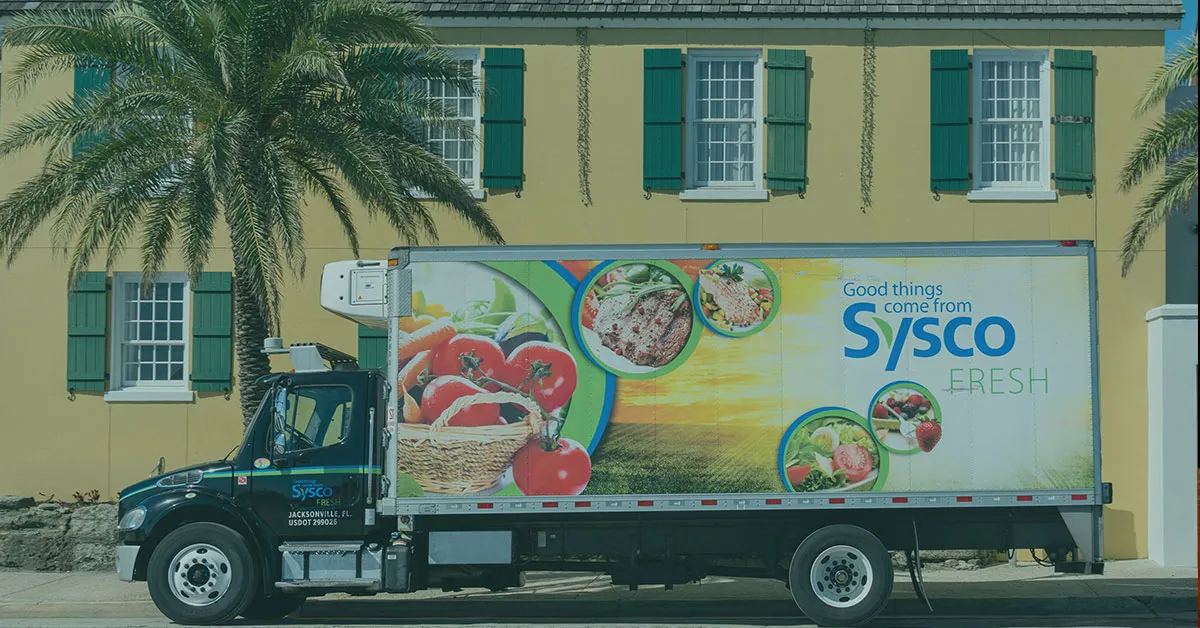
This is a deep dive into what my Eater colleagues have dubbed The Syscourse—the ongoing discourse that has surrounded the broadline food distributor Sysco over the past few weeks.
Whether you’re deep in those conversations yourself or you want a primer on what’s been going on, we’ve got you covered. Punch contributor Eliza Dumais chatted with the Independent Restaurant Coalition and a handful of highly opinionated operators and chefs to get their takes. Read on for their thoughts on Sysco, the company’s proposed acquisition of Restaurant Depot, and how that merger could impact both small businesses and diners. —Mary Anne Porto, senior editor
Even if you put your personal Sysco gripes aside—late or missing deliveries, rotten or damaged food, hefty minimums, Eric Sze’s compelling investigation into Michelin-Sysco ties—the major broadline delivery service’s proposed acquisition of Jetro Restaurant Depot deal still raises plenty of concerns as far as monopolies go. In an economy where food costs are already astronomical for most restaurateurs, the existence of competing channels allows operators to compare prices and quality, negotiate, and keep costs down. It’s a system of checks and balances that’s quickly eliminated when competition dissipates.
The merger threatens to edge out smaller independent restaurants who don’t wish to buy in bulk. “I have bakers who are telling me they can’t possibly buy their buttermilk from Sysco because they only sell it in one massive quantity. It would expire before they could make use of it,” says Erika Polmar, the executive director of the Independent Restaurant Coalition, the organization that recently put out a petition calling on the FTC to block the merger this past week.
“We are independent restaurant and bar owners, operators, and workers from across the United States. Our businesses, and the communities we serve, depend on fair, competitive, and functioning food supply chains,” reads the petition. “Food costs are high, margins are razor thin… and competition among suppliers is not a luxury; it’s the difference between staying open and closing for good.”
On the other hand, there’s been an uptick in diners shaming bars and restaurants for using Sysco products in the first place, from Sysco pastry outrage to a new Instagram account calling out venues who receive Sysco deliveries. But, as Polmar and other operators have pointed out, there’s more nuance to the conversation that’s being overlooked.
We sat down with Polmar, along with Rebecca Masson, owner of Houston’s Fluff Bake Bar, Stella Dennig of Oakland, California’s Daytrip, and chef Ari Miller of Philly’s Post Haste to explore the Syscourse.
Erika Polmar: It could mean restaurant closures, plain and simple. For some smaller restaurants—food trucks, bakeries—being able to purchase produce at a cash-and-carry spot without minimums is a huge necessity. And right now, having other vendors that compete with Sysco keeps prices in check. We’ve seen this time and time again: If one big conglomerate takes over a sector, then there’s no competition, and prices go up. Restaurants are drowning right now. I field calls every single day from restauranteurs saying, “I don’t know if I can do it anymore.” The cost of doing business is so high that sometimes it just doesn’t make sense. Sysco best serves spots with [many] locations, and in the end, they’re not built to cater all that well to small independent businesses.
Rebecca Masson: Sysco just recently laid off about 1,200 employees. How are they laying people off, taking on this amount of debt, and telling me they’re not going to raise the prices at Restaurant Depot? I mean, excuse my French, but they’re full of shit, right?
Stella Dennig: The prices at Restaurant Depot are often lower by up to 20 percent, and that’s because their distribution chains are completely different. They’re not paying for product to get to restaurants, so they don’t have to pay drivers. They don’t have to pay for those trucks going out, or the gas. The merger threatens that because there’s not really an incentive to keep the prices lower in one place than another.
Ari Miller: [Restaurants will] end up paying a hell of a lot more for product that’s a hell of a lot worse for our food system and local economy, [which is already vulnerable because] our government has doubled down on the profitability of the military industrial complex, gutting the barely-there safety nets for the working class, and threatening immigrants who have historically been the backbone of the food economy. Sysco’s approach [further] guts communities by outsourcing everything to industrialized agriculture and disposable, product-based consumerism. So now we have a shittier product that’s still difficult to pay for.
RM: [As an example,] milk-per-gallon is cheaper at Restaurant Depot right now than it is at [another broadliner called] Ben E. Keith’s. If this deal actually does go through, and Restaurant Depot gets put underneath the Sysco umbrella, the cost of milk now goes up, right? And now you’ve got mom-and-pops, private cottage bakers, and people like me paying double for dairy. If I’m paying double for milk, that means I have to charge more for my products in the bakery.
SD: I think that more affordable or price-sensitive restaurants will be disproportionately impacted because they often have to use big broadliners to get prices down—which is ultimately something that consumers benefit from. If the merger happens, I imagine we’ll start to see prices increasing across the board in ways that consumers can no longer afford…in an economy where rising inflation is making it hard for anyone to make ends meet.
“I field calls every single day from restauranteurs saying, ‘I don’t know if I can do it anymore.’”
AM: I have a very limited relationship with Sysco. Fryer oil is one of the handful of commodity products I use and it sometimes comes through Sysco by way of a local distributor. That said, my larger existential relationship is an adversarial one. Sysco represents the industrial homogenization of the food economy. My entire career is based on the notion that creativity and voice are derived from the very fact that not everything can be the same all the time, and that those variables are what make my kitchen unique and independent. This is what cheffing is all about.
SD: We don’t use Sysco because they’re horrible to work with—but that’s not to say that there won’t be a time where we might need to. We do work with a broadliner, US Foods, and while we don’t use the Depot a ton, it does provide a really important service for restaurants like ours when we’re in need of something last-minute, or a delivery doesn’t arrive as promised. Sysco is one of the worst at this—they’ll short you something or not let you know that they’re out of stock, then you suddenly don’t have what you need to run your business. They don’t care because you’re a small independent restaurant. You don’t do anything for them. There’s no accountability, whereas small local distributors do care and their reps will drive out the product that was missed or find a way to solve the problem.
EP: There’s this narrative out there that restaurants who purchase from Sysco and Restaurant Depot are bad, and that restaurants are justifying serving premade products from both of those places just to make money. Sure, that does exist. But what they don’t realize is that restaurants need things like dish soap and trays, deli cups, and cooking oil that they’re not going to be buying from another local source. For the most part, folks are buying ingredients, not prepared frozen items.
SD: On the whole, I’m so tired of people policing things like that. Most restaurants are doing what they can to keep their doors open, and frankly, there are plenty of reasons why a spot may have no choice but to place orders with Sysco. I don’t think there should be any judgement at all about using a large broadliner.
AM: Sysco supplies so much to small businesses in marginalized communities where a small kitchen or grocery is one of the few, independent means for a family to earn. Go to Restaurant Depot and see the people buying for the bodegas, corner groceries, and sandwich shops. It’s as necessary and functional as it is utilitarian, but it’s also exploitation.
EP: I get the whole pastry scandal of it all, but again, that does a disservice to the fact that restaurants have to buy ingredients. Sure, maybe every dive bar jalapeño popper in the U.S. is tasting the same right now because it’s coming off of a Sysco truck, but that’s not really taking into consideration the fact that they sell supplies, they sell raw ingredients. What you do with that oil or those tomatoes will be different from the next person. I think it’s a bit of an overgeneralization that everything is a slop bowl, but the social media feedback loop seems to be running with that narrative. We’re still seeing creativity and care in our restaurants, even when Sysco product is involved.
RM: I’m not sure there’s too much truth to that with the exception of places where you expect to eat frozen chicken fingers and fries that taste the same as anywhere else. We have some big-box chains in Texas with playgrounds for the kids and enormous menus, and sure, yeah, maybe they’re using premade Sysco product, but you’re not going there for the best meal of your life. You’re going there for the chicken fingers. They’re probably the same versions you’re eating at the ballpark. I think that’s been going on for a long time, and it really doesn’t apply to most of the independent restaurants out there taking their time to make something original and creative for you. I think people are only talking about it right now because everyone’s upset about the merger. If you see me at Restaurant Depot, I’m buying eggs, milk, butter, maybe cheese—it’s not like I’m buying premade ice cream and premade cookies. So if someone said to me, “I saw you in Depot,” I’d be like, “Yeah, eggs are $37 a case there.”
“It’s as necessary and functional as it is utilitarian, but it’s also exploitation.”
EP: While operators are using broadliners like Sysco or US Foods, as well as cash-and-carry wholesalers like Restaurant Depot, they’re also putting their money in countless other places. They’re buying from farmers. They’re buying from fishermen. They’re buying from regional bakers or mills, specialty importers, and tiny little purveyors. When these restaurants close because they can’t afford to keep up operations, they’re taking business away from those smaller purveyors. This damages the entire food ecosystem.
SD: It’s hard to hope for much under this administration, but we have seen a merger like this with US Foods blocked by the FTC before, so there’s a precedent, and I really feel like people know about this. People outside of the industry are talking about it, it’s in the news, it’s on social media, and that’s really promising. That’s the stuff that makes it hard for the powers that be to ignore a phenomenon like this.
EP: Fortunately, the IRC has done tough things before, and we’re just gonna fight this with all of our might. And in addition to fighting it, we’re also hearing from folks that are Restaurant Depot customers and Sysco customers to try and anticipate some fears if this does go through, and how we can mitigate them. There’s no way to quantify hope exactly, but there is some very sincere optimism in the ways that restaurant owners are coalescing, and community is forming, and people are not taking this sitting down. Plus, congress has oversight of the FTC. And one skill that restaurant owners have really developed since 2020 is that they have absolutely no fear in picking up the phone and calling congress and asking for what they need.
RM: The deal feels too sketchy—with the lay-offs and the debt—to be sound. So yeah, I’m pretty hopeful. And you know, we’re a bunch of fighters in the hospitality industry. I mean, we’re fighting every day just to keep the doors open sometimes. So we’re gonna fight this battle, too.
This interview has been edited and condensed.
Get our freshest features and recipes weekly.
Related Articles
More Stories you may like